Nov 21, 2015 Im assuming that thing with Tommy and the circus is meant to be a lead-up to the original Black Jack series. Overall, loved the arc but noticed that not much of it was actually about racial issues in the way the draft dodger and vietnam arc did have commentary on war. But it was still amazing per usual, especially the stuff with Risenberg. Find many great new & used options and get the best deals for DVD Anime Black Jack Complete 1-61 End 10 OVA 6 Special 4 Movie Bj 21 Bonus at the best online prices at eBay! Free shipping for many products!
- Young Black Jack Full Ending Lyrics
- Young Black Jack Full Ending Song
- Young Black Jack Full Ending Youtube
How would you rate episode 1 of
Young Black Jack ?
Theron Martin
Rating: 1.5
Review: The Frankensteinish-looking doctor Black Jack is one of the most famous creations of esteemed manga-ka Osamu Tezuka and is without question the most iconic doctor character in all of manga and anime. Hence that something like this – namely, an “Early Adventures of” kind of thing – has not been done before is rather surprising. That it is being made in an era when anime medical dramas are few and far between, and that the setting has not been updated in some way, is also rather surprising. But this is also clearly not a series intended primarily for the hard-core otaku crowd. It is a nostalgia piece whose target audience probably skews much older than the traditional anime fan, and the way it retains the look, character designs, and feel of an anime from multiple decades past only reinforces that impression. That may create a major barrier to the series being appreciated by younger anime fans.
Of course, the over-the-top, sensationalistic nature of the surgery done may not suit everyone, either. In this particular case, a 22-year-old medical student named Hazuma (who is not known as Black Jack at this point) takes on an effort to reattach a young boy's arm and leg in the wake of a train accident, despite the triage doctor's assessment that they could not be reattached. He enlists the help of Mariko, a female intern who had sought him out when accident victims started pouring in, and a drug-abusing doctor who is afraid of blood. Despite a race against time and complications along the way, and despite this being his first surgery, Hazuma pulls it off. Afterwards, though, the father of the boy stiffs him on the agreed-upon fee, paying only a fraction of the amount because he has discovered that Hazuma does not formally have a license yet.
A lot of the original Black Jack stories involved some type of “hard knocks” lesson or circumstances (though usually for others than Black Jack himself), so it looks like this will be an ongoing theme here, too. Keeping the influence of the time period, such has how many of the other medical students get involved in the protest movements of the late 1960s, is also an interesting choice, and the opener suggests that the Vietnam War will be involved at some point, too. But probably the neatest thing that the first episode does is in the closer, where it offers side-by-side comparisons between various characters the way they appear/will appear in the anime and the way they appeared in Tezuka's original manga.
I lost interest in medical dramas in the late ‘90s and the anime way of doing it badly pales in comparison to a classic like the American TV series ER, so for me this series has multiple big strikes against it from the get-go. Even the historical context of the episode and decent production values are far from enough to offset that. Hence it gets a low score from me, but this is more a matter of personal taste than it necessarily being bad.
Young Black Jack is available streaming at Crunchyroll.
Hope Chapman
Young Black Jack Full Ending Lyrics
Rating:
Black Jack is far and away my favorite Osamu Tezuka work. I also enjoy blatantly shameless manservice, the sillier the better. However, I am extremely sure that I never wanted to combine these two things. Oh well, here we are!
If I had to sum up Young Black Jack in two adjectives, they would be words in conflict: it's both 'competent' and 'uncomfortable.' This is perfectly competent as a procedural drama. Even with a personality palette swap, Black Jack's appearance is bizarre enough to make him a perfect 'eccentric doctor' for performing weird surgeries. As an inexperienced medical student, he sits on park benches miming perfect ghost surgeries, while passing staff stare at his weird frankenstein-face and ask him if he's participating in the student protest.
Ah, this is where the uncomfortable part first comes in. So, this show seems to be addressing a series of famous medical student protests from the 1960s in a not remotely flattering light, which is pretty irresponsible considering that their demands were completely reasonable. This is especially baffling when you consider that these interns are rallying for fair pay. Baby Beej looks down on them. Yes, Black Jack, the doctor who will one day become famous for demanding exorbitant amounts of money for his miracle surgeries, looks down on workers seeking fair pay for surgeries. And by 'one day,' I mean in this very episode for his first surgery ever. I guess the logic here is that Black Jack is a miracle doctor, and only miracle doctors get to charge an arm and a leg for re-attaching a small boy's arm and leg. Every other normal doctor should get used to pennies on his Benjamins.
Then again, this isn't the Black Jack that Tezuka fans remember and love, not by a long shot. Obviously, he's gotten a major facelift to make him into an object of lust for the ladies. Young Black Jack angsts in dark corners, speaks of a soul torn by pathos, and takes off his shirt at every opportunity to reveal his not remotely unattractive 'disfiguring scars.' After he finishes his first surgery, Black Jack can't stop his hands from shaking, bent over with dark emotion atop the hospital roof. Bishounen Black Jack is too ridiculously 'hot' to handle, complete with a sexy crown of thorns he wears in dream sequences.
Honestly, these are the changes I don't mind so much. If 2015 needs to make Black Jack into a hunky dreamboat to sell him, that's perfectly fine, and the solid standalone approach along with appealing production values make this a fine show worth checking out. My gripes with Young Black Jack actually go deeper than his new washboard abs. My problem with the show is that it's so thematically different from everything I liked about the original. Black Jack as a story isn't about Black Jack as a character at all. Occasionally, Tezuka would provide flashbacks to his past to flesh out his philosophy, but Black Jack stories were great because they were bizarre and impossible dark miracle stories, where people would trade everything they had for a second chance at life, only to find out that the tradeoff wasn't everything they thought it would be. Sometimes Black Jack's miracles end well, and sometimes they end poorly, but all of them were fascinating morality plays. This version of Black Jack seems to be more about the title character's own psychology, in a not-particularly-complex kind of way. The original appeal is gone, replaced by a hormone-fueled character drama. It's not really Black Jack anymore.
Anyway, it's not Black Jack, but it is a neat little show on its own merits. If you've ever harbored a secret lust for Black Jack, you should definitely check it out, and if you're thirsting for more anime medical procedurals, this could be a unique entry in that relatively unmined genre. Also, the playing cards in the ED credits that show the difference between the original character designs from the manga and these new anime versions are cool. Not that I needed the side-by-side comparison to tell that this is worlds apart from the original manga.
Young Black Jack is available streaming at Crunchyroll.
Nick Creamer
Rating: 3
Kuroo Hazama is a medical student in the 1960s, honing his craft in an era marked by student demonstrations. As student protests leave the hospitals dangerously understaffed, Hazama finds himself dragged by intern Maito Okamato into a riotous medical wing, where a deadly train crash has left dozens wounded. As the doctors tend to the various injuries, a boy comes in who has had both an arm and leg severed, and the resident doctor decides they will be forced to amputate. But Hazama thinks he can reattach the limbs, and so he makes a deal with the boy's parents, taking his first step into becoming the legendary underground doctor Black Jack.
Young Black Jack is definitely a weird one. A modernized prequel to the classic Tezuka comic, it feels like it's being pulled in multiple directions both tonally and aesthetically, and the end result is a very singular thing. The first, most inescapable element defining this new series is Hazama's design. As opposed to the gruff and often menacing doctor of earlier adaptations, this Black Jack possesses lush eyelashes, piercing eyes, and rippling muscles that manage to find themselves in the camera's eye a good handful of times this episode. Basically, this Black Jack is clearly designed as man-meat for a presumed female audience, making for a kind of inherently entertaining contrast with his classic appearance.
Hazama's design isn't the only interesting one. The rest of the cast possess a strange diversity of designs as well; though most of the characters, including Maito, are rendered in a slightly retro but more or less conventional style, a few characters (like the resident doctor and the boy's father) embrace the more stylized look of classic Tezuka side characters, making them seem as if they're from a totally different species from the shining-eyed Hazama. It's not necessarily a problem, but it's definitely a striking contrast.
Designs aside, this first episode plays out like a fairly conventional medical procedural. The show has a bit of trouble creating a sense of consistent drama within the central operation, but there are enough visual flourishes and twists to keep it relatively entertaining. The period setting also adds an element of interest, though I'm not sure what to make of how fiercely this episode comes down on the student protesters (they're essentially framed as selfish monsters who are directly responsible for letting patients suffer). There were also some weird tonal shifts throughout, with the show seemingly unable to decide whether it wants to be a modern drama or a Tezuka-styled melodrama. “Weird” is probably the best word to describe Young Black Jack - it's moderately successful as both a medical procedural and vehicle for shirtless men, but the ways it feels trapped between priorities and styles is more interesting to me than anything the show is actually trying to do.
Casino oro san luis rio colorado. San Luis Rio Colorado, Sonora: Casinos and other gaming information including the latest casino news, Texas hold'em tourneys, slot machine info, pari-mutuel (dog tracks), and more topics. Contact information and photos of many gambling facilities in San Luis Rio Colorado. Big Bola Casino San Luis Rio Colorado property details page: This casino is located in San Luis Rio Colorado, Sonora. Big Bola Casino San Luis Rio Colorado features 0 slot machines for you to enjoy. World Casino Directory also lists and books casino hotels in San Luis Rio Colorado. You will also find pictures of Big Bola Casino San Luis Rio Colorado or see the latest news headlines about Big.
Young Black Jack is available streaming at Crunchyroll.
Rebecca Silverman
Rating: 4
Review:
Prequels to well-known or beloved series often have their work cut out for them. It's no easy task to take an established character and create a fully realized reason for him to become the man we all know without accidental contradictions or impossible coincidences. Luckily when that character is Osamu Tezuka's iconic back alley doctor Black Jack, it gets a little easier, because he's such an interesting, off-the-books kind of guy in the first place that all that really needs to happen is to give him a reason to be the rogue that he is. This first episode feels like it does a good job of getting that process underway as we meet a young Hazuma Kuroo as a medical student in the 1960s. He's already a bit of an odd duck, performing imaginary surgeries like some people play air guitar, but he's more than willing to step up to the plate when a child's life and limbs are in danger.
We mostly see Hazuma through the eyes of medical intern Okumoto Maiko, one of the few interns not on strike for better pay. This immediately sets her alongside Hazuma as someone in the medical profession to help people, something we see demonstrated when striking interns refuse her pleas for help when a train hits a bus at a railroad crossing. Hazuma, however, jumps right up..after he finishes his imaginary surgery. That was a bit of an irritant – there's clearly a medical emergency going on (he can't have missed the sirens, and he demonstrates that he is perfectly aware of what people are saying to him), but he has to finish his little game of let's pretend first? This strange blend of caring, avarice, and indifference permeates this episode, with the patient's parent refusing to pay full price for the surgery because the child is now fine, Hazuma's ludicrously high price to begin with, and the callousness of the interns. While it can be annoying, or at least frustrating, to the viewers, it does feel like it's trying to demonstrate what drives Hazuma's transformation to Black Jack later on, and presumably now that the first episode is over, it will slow these elements down a little.
The animation is really lovely, with graceful hand movements and nice details of medical practice in the 1960s, and as an added bonus, it assuages my pet peeve by actually looking like the 1960s. It's also the least gruesome medical drama I have ever watched, which may make this more of a possibility for some squeamish viewers, possibly the goal in leaving out the gore. The characters themselves are a bit harder to get used to, with a blend of very Tezuka-esque people alongside series artist Yū-Go Ōkuma's much prettier, more contemporary designs. This is where the ending theme proves itself a real bonus: it shows images of the original Tezuka characters alongside their Okuma counterparts, which is really fascinating, particularly in terms of who he updated and how.
So far Young Black Jack, with its narration by elder Black Jack and its fast-moving but not melodramatic plot, is looking like a prequel that works. While it probably helps to be familiar with Tezuka's works beforehand (we're promised cameos from characters from other series), it doesn't feel necessary to enjoying this, at least as of now. So don't let the fact that you aren't up on your Tezuka scare you off from checking this one out.
Lynzee Loveridge
Rating:
Osamu Tezuka's underworld doctor who performs medical procedures at his own leisure has existed in some capacity in manga or anime for the last 40 years. This latest incarnation is a prequel, set in the late 1960s when Kuroo Hazama, the man who would become Black Jack, was just an eccentric medical student in college. The episode opens amidst the backdrop of the Tokyo University protests against the “Doctor Registration law,” a move that would create longer internships (unpaid work) for medical students. Just then, a bus and a small child on a bicycle are hit by an oncoming train. The university hospital is understaffed and the boy needs multiple limb reattachments. Intern Maiko Okamoto recruits Hazama, who immediately goes to work.
Ts&Cs. Julian's,STJ 3310MaltaPhone: +356 23 710 555Intercontinental MaltaSt George's Bay,St Julian's,STJ 3310,Phone: +356 2137 7600More Info888poker is not responsible for any tournament event details including, without limitation, structures, schedules, formats, general rules or prize pool distributions. 888 poker battle of malta. Management reserves the right to change tournament dates, suspend, or cancel tournaments, in whole or part, without notice for any reason at any time.The license holder and operator of this event is Eden Leisure Group (ELG) and the Olympic Entertainment Group (OEG).Battle of Malta – tournament structure and rules. The following are the terms and conditions of the “BOM 2019 Main Event” (the 'Promotion').
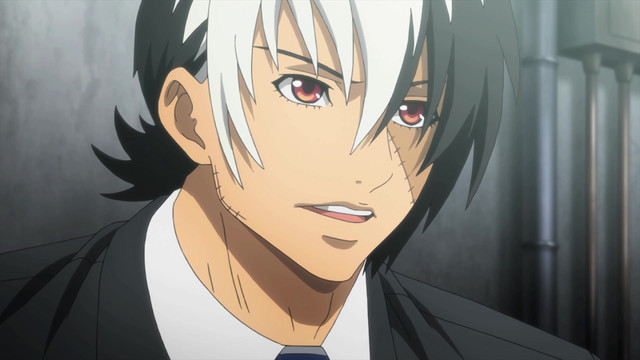
I'm a newcomer to the Black Jack series, but no stranger to Tezuka's manga work. It has a distinct art style with plenty of cartoonish charm. Old men have bulbous noses and wild hair, women are voluptuous and round, and male leads are square-jawed. All characters are generally squat in appearance. Yū-Go Ōkuma's Black Jack design is decidedly focused on bringing in female viewers. Hazama is unabashedly gorgeous with dewy lips and an oxford shirt with button enclosures practically screaming from the strain of keeping his shirt on. The audience gets to see his abs not once, but twice, while the child patient is probably bleeding out on the table so the show can really work in his motivational angst and fanservice. It's mindlessly silly, but otherwise inoffensive.


The show hasn't completely abandoned its Tezuka roots though. Minor characters, like the boy's parents and the doctor who refused to perform the reattachment surgery, are right in line with Tezuka's usual designs. It feels, if the ending sequence is any indicator, that this is meant as a nod to the creator, but I can't help but feel like it's incongruous with rest of the show's presentation. Okuma's Black Jack and Tezuka's designs are so drastically different that they shouldn't exist in the same fictional space.
It's hard to say what Young Black Jack has to offer to audiences. The time, setting, and possibility of playing with a well-established character has its possibilities. On the other hand, fans of the franchise might find the changes to Tezuka's doctor a bit hard to swallow, and it fails as a medical procedural if the content is just talking heads in medical masks with a lot of shiny sutures swirling around them. The rating this time is predominantly for the eye candy and some hope that the show puts the time in to develop Kuroo Hazama into the man he'll become, but I'm not holding my breath.
discuss this in the forum (544 posts) |this article has been modified since it was originally posted; see change history
Fruit cocktail slot free online. FinallyIgroSoft has definitely captured the hearts of the classical slot enthusiasts through this release.
Young Black Jack Full Ending Song
back to The Fall 2015 Anime Preview Guide
Season Preview Guide homepage / archives
| Young Black Jack | |
| ヤング ブラック・ジャック (Yangu Burakku Jakku) | |
|---|---|
| Manga | |
| Written by | Yoshiaki Tabata |
| Illustrated by | Yūgo Ōkuma |
| Published by | Akita Shoten |
| Demographic | Seinen |
| Magazine | Young Champion |
| Original run | November 22, 2011 – present |
| Volumes | 16 |
| Television drama | |
| Directed by | Kentaro Otani |
| Music by | Yoshihiro Ike |
| Studio | Toho Studios, Kadokawa Daiei Studio |
| Original network | Nippon TV |
| Original run | April 23, 2011 |
| Episodes | 12 |
| Anime television series | |
| Directed by | Mitsuko Kase |
| Written by | Ryōsuke Takahashi |
| Music by | Daisuke Ikeda |
| Studio | Tezuka Productions |
| Licensed by | |
| Original network | TBS, CBC, Sun TV, BS-TBS |
| English network | Animax Asia[1] |
| Original run | October 1, 2015 – December 17, 2015 |
| Episodes | 12 (List of episodes) |
Young Black Jack (ヤング ブラック・ジャック, Yangu Burakku Jakku) is a Japanese manga written by Yoshiaki Tabata and illustrated by Yūgo Ōkuma. It is based on Black Jack by Osamu Tezuka. It is serialized at Akita Shoten's Young Champion magazine in its November 2011 issue. An anime adaptation aired in Japan from October to December 2015.[2] The story follows Black Jack as a medical student in the 1960s.[3]
- 3Media
- 3.3Anime
Plot[edit]
In the 1960s, Kuroo Hazama is a gifted young medical student with a dark past who tries to make a name for himself. Despite only being a medical student, his is a brilliant surgeon and attracts attention after he completes seemingly impossible operations and displays greater skills than his formal training would allow. Hazama devotes himself to the world of medicine together with his friends, the intern Maiko Okamoto and the doctor Yabu. Set against the background of student riots, war, and corruption, Hazama finds himself caught up in a series of circumstances which challenge his integrity as a person and his path towards becoming a surgeon. The choices he makesleads him to become the legend known as Black Jack.
Characters[edit]
- Kuroo Hazama (間 黒男, Hazama Kuroo)
- Portrayed by: Masaki Okada (live-action drama), Voiced by: Yuichiro Umehara (anime)
- Yabu (藪, Yabu)
- Voiced by: Kōji Yusa (anime)
- Maiko Okamoto (岡本 舞子, Okamoto Maiko)
- Voiced by: Shizuka Itō (anime)
- Tōrō Tachiiri (立入 灯郎, Tachiiri Tōrō)
- Voiced by: Hiroki Touchi (anime)[4]
- Doctor Kirī (軍医 キリー, Dokutā Kirī)
- Voiced by: Junichi Suwabe (anime)
- Eri Imagami (今上 エリ, Imagami Eri)
- Raymond (レイモンド, Reimondo)
- Voiced by: Norihiro Inoue (anime)[4]
- Tomezō Kanayama
- Voiced by: Kazuo Oka (anime)
- Jou
- Voiced by: Takuya Eguchi (anime)
- Aoyama
- Voiced by: Megumi Toyoguchi (anime)
- Tamura
- Voiced by: Yoshitsugu Matsuoka (anime)
- Smith
- Voiced by: Ryōtarō Okiayu (anime)
- Marlon
- Voiced by: Hisafumi Oda (anime)
- Hugo (ヒューゴ, Hyugo)
- Voiced by: Shunsuke Takeuchi (anime)
- Takayanagi
- Voiced by: Kentarou Tone (anime)
- Bob
- Voiced by: Hiroki Yasumoto (anime)
- Phan
- Voiced by: M.A.O (anime)
- Steve
- Voiced by: Shōta Yamamoto (anime)
- Maruo Hyakki (百樹丸雄, Hyakki Maruo)
- Voiced by: Mamoru Miyano (anime)
Media[edit]
Manga[edit]
Young Black Jack Full Ending Youtube
The prequel manga based on Osamu Tesuka's Black Jack manga series is written by Yoshiaki Tabata, and illustrated by Yūgo Ōkuma. It began serialization in Akita Shoten's Young Champion issue #23 of 2011, released on November 22.[3] Akita Shoten published the first tankōbon volume of the manga on May 18, 2012[5], and fourteen volumes have been released as of December 20, 2018.[6][7] In April 2019, it was announced that the manga will finish in its 16th volume that will be published in summer.[8]
Live-action drama[edit]
A live-action TV special adaptation aired at April 23, 2011 at Nippon TV. The special starred lead actor Masaki Okada as young Black Jack. Kentaro Otani directed the special.[3]
Anime[edit]
A 12-episode[9]anime television series adaptation directed by Mitsuko Kase at Tezuka Productions is scheduled to air from October 1, 2015 at TBS, CBC, Sun TV, and BS-TBS.[2][4] The anime has been licensed in North America by Sentai Filmworks.[10] It is also currently streaming on Crunchyroll.
Episode list[edit]
| No. | Title | Original air date | |
|---|---|---|---|
| 1 | 'Where's the Doctor?' 'Isha wa Doko da!' (医者はどこだ!) | October 2, 2015 | |
| After a tragic accident where a train collides with a bus stuck on the tracks, dozens of injured are rushed to a nearby hospital. We are introduced to Black Jack as a young medical student who offers to undertake the task of re-attaching the severed an arm and leg of a young boy hit by the train for JP¥5 million. He successfully saves the boys limbs during his first surgery at his friend Yobu's private clinic. However, the boy’s father offers only one tenth of the money because Jack is still a student. | |||
| 2 | 'Abduction' 'Rachi' (拉致) | October 9, 2015 | |
| Black Jack and his gambling friend Yabu are kidnapped along with some other men by the shady Tachiiri to whom Yabu owes money. Tachiiri offers each of them a chance clear their debts in exchange for donating their heart for a heart transplant required by the ageing Kaneyama Tamezou, founder of the Kyuukoku sect. The doctor hired for the transplant disappears, and Jack agrees to carry out the first heart transplant in Japan for a fee of JP¥50 million. Raymond, one of the other men, offers his heart for money to heal his sick daughter back in his own country. However, as the operation commences Tamezou dies, so Jack altered Raymond’s appearance to replace Tamezou, avoiding the dilemma of ending an innocent life. | |||
| 3 | 'Deserter' 'Dassouhei' (脱走兵) | October 16, 2015 | |
| During the Vietnam War, one of two army deserters falls ill. Meanwhile, Hazama's friend, Maiko Okamoto, visits his apartment to learn the secret of his surgical skills and she finds he has been practicing on fish and pigs feet. They discover that a sick deserter named Smith is in the adjacent apartment, and Hazama is pressured into helping him by his associates, especially Aoyama, after he diagnoses a cerebral edema. They take Smith to an obstetrics clinic, and Hazama operates to relieve pressure on the brain and saves his life. However, Hazama is arrested because Smith is actually a CIA operative tracking deserters in Japan. Hazama is eventually released, but wonders why he risked his medical career to save someone he did not know. | |||
| 4 | 'In Vietnam Part 1' 'Betonamu nite sono 1' (ベトナムにて その 1) | October 23, 2015 | |
| Hazama goes to Vietnam in looking for his friend Yabu, who'd vanished after arriving a month earlier to restart his career as a doctor. Hazama meets the photojournalist Takayanagi, who helps him find transport on a military convoy to Yabu's last known location in Danat, led by Bob with interpreter Phan. On the way, they are attacked by the Vietcong, and in the midst of the battle Hazama goes to the aid of a Steve, a wounded soldier. However, they are eventually all captured by the Vietcong. | |||
| 5 | 'In Vietnam Part 2' 'Betonamu nite sono 2' (ベトナムにて その 2) | October 30, 2015 | |
| Hazama's group are now captives of the Vietcong, but some days later their interpreter, Phan is given a key by a Vietcong whose friend was saved by a Japanese doctor, possibly Yabu. The group trek through the jungle, and at the point of exhaustion, they are found and taken to Yabu's field clinic and the old friends are united. However, the wounded Steve needs urgent medical attention, and they manage to arrange for a US doctor to be dropped in by parachute. He has excellent skills and technique, and he and Hazama grudgingly acknowledge each other's abilities. | |||
| 6 | 'In Vietnam Part 3' 'Betonamu nite sono 3' (ベトナムにて その 3) | November 6, 2015 | |
| Steve regains consciousness, but is delirious and paranoid. He wanders off into the fields, but before Bob and Hazama can reach him he steps on a land mine and is killed. Steve's death causes Bob to become unstable, and he becomes angry and vengeful when the Anh, the Vietnamese youth who helped them escape, arrives in the village badly wounded. The US doctor, Hazama and Yabu begin to operate on Anh, but frustrated by what he sees as traitorous behaviour, Bob reports that the village is a rebel base and calls in an air strike. The villagers evacuate, but the three doctors continue the operation despite the impending attack, with Hazama and the US doctor developing a growing respect for each other’s skills. They manage to complete the operation and evacuate just as bombs rain down, destroying the village. Later, the US doctor's name is revealed to be Kiriko. | |||
| 7 | 'Painless Revolution Part 1' 'Mutsu kakumei pato 1' (無痛革命パート 1) | November 13, 2015 | |
| Following the assassination of Dr. Martin Luther King, and following Hazama's return from Vietnam, he and Maiko are in Chicago to observe a surgery by the much-renowned Dr. Risenberg. Later, they encounter Maiko's old friend Tiara and her friend, the civil rights activist Johnny Bassett. However, his is attacked by two African American men demanding that he take direct action, and Tiara is shot during the confrontation. Johnny's arm is also badly damaged, and Dr. Risenberg offers to operate, and Hazama and Maiko are co-opted to assist. After the operation, Hazama realizes that Johnny has analgesia, an inability to feel pain which he assumes is congenital. However Hazama discovers that Johnny acquired it later in life and offers to find a cure within the three days he has left in Chicago. Meanwhile Yabu and another doctor, Thomas Williams, arrive in the US. | |||
| 8 | 'Painless Revolution Part 2' 'Mutsu kakumei pato 2' (無痛革命パート 2) | November 20, 2015 | |
| Hazama does his best to investigate the cause of Johnny's analgesia condition. When he encounters Yabu, who arrives with his patient Tommy who has PTSD, Hazama learns that Johnny never went to Vietnam, and was the subject of military experiments by the CIA. The CIA agent, Hugo, visits Dr. Risenberg who is a former Nazi doctor whose real name is Dr. Linge, and Hugo pressures him to treat Johnny to remove his analgesia and restore his nerve impulses. At the next violent demonstration, Johnny immediately feels the pain of the police batons and runs away to escape the pain, destroying his reputation of a being a hero impervious to pain. | |||
| 9 | 'The Gruesome Chronicle Part 1' 'Insan kuronikurupāto 1' (陰惨クロニクルパート 1) | November 27, 2015 | |
| Hazama meets a lecturer, Maruo Hyakki, a quadruple amputee, who was originally one of the surgeons who operated on him alongside Dr. Honma. Reference is made to the story of Dororo and Hyakkimaru by Osamu Tezuka in which Hyakkimaru lacked 48 parts of his body which was given to demons. Hazama learns of Hyakki's unfortunate fate, his research in advanced mechanical prostheses, and his plans to return as a surgeon. Hyakki wants to have the new prostheses implanted on his body, but can't find anyone willing, and so Hazama risks his future career by offers to do it himself. The surgery is successful and Hyakki proceeds to rebuild his reputation, gaining a request to do an operation by his former institution, Teito University. However, the plan is cancelled after being sabotaged by the circulation of photographs of him carrying out an autopsy wearing his prostheses. Shaken, Hyakki goes to bid his friend professor Takara goodbye, only to overhear him talking with Professor Tano indicating they were behind the sabotage. | |||
| 10 | 'The Gruesome Chronicle Part 2' 'Insan kuronikurupāto 2' (陰惨クロニクルパート 2) | December 4, 2015 | |
| Police find a car that that crashed through a guardrail and burst into flames, incinerating the driver but his left arm was noticeably missing. Hyakki is coincidentally missing in action and takes a family sword named Hyakkimaru to be reforged. Meanwhile Miyo reveals that her wedding reception reservation with Hyakki has been cancelled, Detective Ban reveals to Takara that the dead driver was Professor Tano. Hyakki tracks down Takara and reveals that he killed Tano who said that Takara was behind the accident which made him a quadriplegic. Hyakki then severs Takara's left arm. Hazama and Okamoto find Takara on the street bleeding to death, and they perform a quick ligation of the brachial artery to save him. Hyakki later finds Professor Sabame on the rooftop of a building and cuts off his leg, leaving him to bleed to death. Takara wakes up three days later in the hospital and after Detective Ban informs him of Sabame's death, Takara has a nervous breakdown. Ban informs Hazama, Okamoto, and Miyo that Hyakki's motive for the attacks is related to how Director Daigou's faction forced Hyakki out of the University. However, Hazama suspects that there is another reason for the murders. Hazama tracks Hyakki to an old temple filled with statues of demons in the forest, and is shocked at the change in Hyakki's character. | |||
| 11 | 'The Gruesome Chronicle Part 3' 'Insan kuronikurupāto 3' (陰惨クロニクルパート 3) | December 11, 2015 | |
| Hyakki divulges to Hazama that Takara and his associates were part of Assistant Director Kagemitsu Daigo's faction at the university, but when Daigo was involved funds mismanagement, control was transferred to Assistant Director Meio's faction which included Hyakki. Daigo's faction planned to discredit Meio by making him miss an important scheduled operation by sabotaging his car to delay him. However, Meio took ill and sent Hyakki instead, but the mechanic had tampered with the brakes and thus Hyakki was involved in his career-ending accident. Shortly afterwards, Meio died of his illness and Daigo became Director. Hyakki leaves the temple and attacks Daigo in his office, succeeding in severing Daigo's left leg. Hazama asks Takara to confess to the conspiracy, but Takara blames Hazama for giving Hyakki the ability to seek revenge. Hazama finds the injured Hyakki and patches him up, repairing his right eye in the process. Hyakki is eventually apprehended and is sentenced to death, but escapes jail thanks to a robotic eye implant Hazama had fitted to him. Some time later while still a student, Hazama secretly accepts money to replace a surgeon during an operation. Hyakki unexpected visits Hazama, noting the illegal path he has now chosen. Hazama replies that he understands the ruthless nature of the medical field, and is willing to become an enemy of the law to save patients | |||
| 12 | 'The Season of Mania' | December 18, 2015 | |
| Hazama continues to accept money from Tachiiri for operating illegally. One day, he comes across an anti-war protest and assists a young girl who sprains her ankle. He recognizes her as Eri Imagami whom he treated some time earlier when he relieved a cerebral edema on the deserter, Johnny. Hazama applies first-aid to some of the other protesters and again sees Aoyama from that time. Later, Hazama receives a postcard from Eri who is undertaking training with militant revolutionaries in the mountains of Gunma and decides to visit her. Hazama arrives and is shocked to see Imagami suffering from a beating and Aoyama also beaten and tied up after wanting to quit. Hazama is also taken prisoner, but when Imagami has a seizure from her injuries, the rebel leader relents and allows Hazama to treat her and he operates all night, fixing a hemothorax, rib fractures, nose and orbital fractures, and an injured liver. Suddenly, police surround the cabin and fire smoke grenades to cloud the rebels' vision. Eri staggers outside to stop the confrontation, but she is shot in the chest and falls into the snow. Hazama tells the dying girl that he will fix her again as she dies in his arms. After his graduation, Hazama repays his debts to Tachiiri who offers him more black market deals, but Hazama declines, saying that those jobs will come to him anyway. This is the beginning of Hazama's transformation into Black Jack. | |||
References[edit]
- ^'Animax Asia Premieres Young Black Jack on June 6'. Anime News Network. Retrieved May 25, 2016.
- ^ ab'Young Black Jack Anime Casts Junichi Suwabe'. Anime News Network. September 7, 2015. Retrieved September 9, 2015.
- ^ abc'Young Black Jack Manga Inspired by Tezuka Classic'. Anime News Network. November 8, 2011. Retrieved June 20, 2015.
- ^ abc'Young Black Jack TV Anime's Ad Outlines Premise'. Anime News Network. September 27, 2015. Retrieved September 28, 2015.
- ^ヤング ブラック・ジャック 第1巻 秋田書店 [Young Black Jack Volume 1 Akita Shoten] (in Japanese). Akita Shoten. Retrieved June 20, 2015.
- ^ヤング ブラック・ジャック 第14巻 [Young Black Jack Volume 14 Akita Shoten] (in Japanese). Akita Shoten. Retrieved March 12, 2019.
- ^ヤング ブラック・ジャック – pixivコミックで漫画を無料試し読み [Young Black Jack – Read Manga Free Trial at pixiv Comics] (in Japanese). pixiv. Retrieved June 20, 2015.
- ^Hodgkins, Crystalyn (April 19, 2019). 'Young Black Jack Manga Ends in 16th Volume'. Anime News Network. Retrieved April 19, 2019.
- ^'Lance N' Masques, Young Black Jack Listed at 12 Episodes Each'. Anime News Network. September 27, 2015. Retrieved September 28, 2015.
- ^'Sentai Filmworks Licenses Young Black Jack'. SentaiFilmworks.com. October 1, 2015.
External links[edit]
- Anime official website(in Japanese)
- Young Black Jack (manga) at Anime News Network's encyclopedia